
By johninnnc
My apologies to those who thought this might be a political article.
There is a great deal of confusion in the world of professing Christendom about how one receives eternal life.
The Bible says that we are saved by grace, through faith in Christ. The Bible also says that the gospel of Jesus Christ is the power of God unto salvation to everyone who believes. For those of us who have understood and believed the gospel,it is incumbent upon us to defend it.
One of the keys to defending the gospel message is to make sure that our Christian testimonies are based on our hope of heaven, which is the finished work of Christ.
Just as our assurance of eternal life should be based on God’s promises alone, our Christian testimonies should not point anyone to the change in our lives, or the combination of our hope and change.
Hope
The founder of this ministry, the late Jack Weaver, wrote a great article entitled “What is Bible Hope?” That article, which is far and away the most popular one of all time for this website, is linked below:
Hope, in it’s New Testament usages, means “to expect or anticipate with pleasure.” For Christians, the hope of heaven is based solely on God’s immutable promise.
Titus 3:7: That being justified by his grace, we should be made heirs according to the hope of eternal life.
God promises eternal life to anyone who will believe that Jesus (God in the flesh) paid the full price for his sin (past, present, and future), and that He was raised from the dead to prove His payment was accepted.
Our Christian testimony should be based squarely on Christ as the sole basis for our hope of heaven.
Change
While eternal life is promised to all who believe in Christ as Savior, having positive, beneficial changes in our lives is conditioned on learning God’s word and applying it to our lives.
John 8:31-32:
[31] Then said Jesus to those Jews which believed on him, If ye continue in my word, then are ye my disciples indeed;
[32] And ye shall know the truth, and the truth shall make you free.
Please note that only those who have believed on Him can continue in His word. Those who haven’t believed on Him are not even in His word. The freedom that Jesus is speaking of here is not eternal life (the people who have believed on Him already have that) – it is the life-changing power of His word, applied to our lives.
Please note, again, that the transformation in this life is not automatic.
Romans 12:2: And be not conformed to this world: but be ye transformed by the renewing of your mind, that ye may prove what is that good, and acceptable, and perfect, will of God.
One does not have to believe that Jesus will “change his life”, or even desire to have Jesus change his life in order to be saved.
More from Ron Shea:
When the “changed life” becomes the focus of a “conversion” testimony, it is not only a practice unknown to Scripture, it is in fact, counter productive in pointing men and women to a saving faith in Jesus Christ. It implies that salvation is allowing Jesus to change one’s life, with the consequence of observing a change. Ultimately, such “testimonies” teach, by implication, the doctrines of Lordship salvation and justification by works, wherein justification is a process by which our lives are transformed. This is, by definition, the doctrine of Justification by works.
In addition to implying that justification is by works (or grace and works), Christian testimonies that are focused on changed lives are very difficult to distinguish from other sources of changed lives.
By necessity, the zealous adherent to any religious or secular pursuit undergoes change in his life.
The Bible makes it clear that religious zeal cannot bring eternal life. Many religious people spend lots of time proselytizing.
Matthew 23:15: Woe unto you, scribes and Pharisees, hypocrites! for ye compass sea and land to make one proselyte, and when he is made, ye make him twofold more the child of hell than yourselves.
Likewise, unregenerate people who believe that they can save themselves may go to church every time the doors are open, do mission trips, work the soup kitchens, donate money to charity, and know every jot and tittle of scripture.
John 5:39-40:
[39] Search the scriptures; for in them ye think ye have eternal life: and they are they which testify of me.
[40] And ye will not come to me, that ye might have life.
Similarly, lots of people change bad behaviors, but that doesn’t result in eternal life. J.O. Hosler put it this way:
A lost person can change his mind about sin and reform from some forms of wickedness, but he will be neither saved nor eternally rewarded for this. He may, however, reap some earthly benefits from living a prudent life.
So, if our testimony is about the change in our lives, how is the hearer to separate our message from all of the others? HE CAN’T!
Last, if the focus of our testimonies is our changed lives, what if our lives change for the worse? Does that mean that Christ didn’t die for our sins, or that He was not raised from the dead? Does this mean that we were never saved in the first place? Of course not!
That is why the focus of our testimonies should not be on our changed lives.
More from Clear Gospel:
The gospel is not about how great we are. It is about our great God and Savior, Jesus Christ. And our testimony is not how God became “yummy in our tummy.” Without question, the quest for meaning and purpose are powerful. But not everyone achieves a sense of purpose simply because they come to faith in Christ. Some go to their grave clinically depressed and emotionally unfulfilled in this lifetime. But no one who has ever come to the cross has walked away dead in their sins. They walk away alive in Christ. The gospel is that Christ died for our sins, and rose again from the dead. May this truly be “our testimony.”
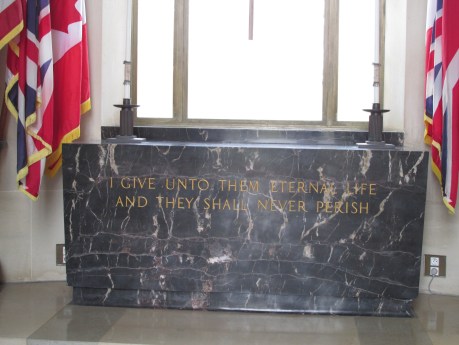 John10:28: And I give unto them eternal life, and they shall never perish, neither shall any man pluck them out of my hand.
 United States
 Canada
 United Kingdom
 Australia
 Netherlands
 New Zealand
 Philippines
 South Africa
 Germany
 Singapore
 India
India Malaysia
 Indonesia
 Brazil
 Thailand
 Switzerland
 Nigeria
 Republic of Korea
 Mexico
 Hong Kong
 France
 Sweden
 Spain
Spain Kenya
Kenya Ireland
 Czech Republic
 Argentina
 Italy
Italy United Arab Emirates
 Romania
 Norway
 Qatar
Qatar Finland
 Ghana
Ghana Japan
Japan Costa Rica
 Trinidad/ Tobago
 Pakistan
 Jamaica
 Saudi Arabia
 Puerto Rico
 Taiwan
 Poland
 Jersey
 Russian Federation
 Belgium
 Slovakia
 Denmark
 Hungary
 Israel
 Guam
Guam Ukraine
 Sri Lanka
 Colombia
 Austria
 Uganda
 Chile
Chile Greece
 Turkey
 Ethiopia
 Croatia
 Egypt
Egypt Namibia
 Barbados
 Peru
Peru Zimbabwe
 Bahamas
 Bulgaria
 Honduras
 Panama
 Bahrain
 Kuwait
 Portugal
 Brunei
 Cambodia
 El Salvador
 Latvia
 Dominican Rep.
 Guatemala
 Cyprus
 Serbia
 Malawi
 Fiji
Fiji Nepal
Nepal Rwanda
 Republic of Tanzania
 Viet Nam
 Zambia
 Ecuador
 Malta
Malta Botswana
 Venezuela
 Bangladesh
 Nicaragua
 Jordan
 Mauritius
 Côte d’Ivoire
 Albania
 Virgin Islands
 Faroe Islands
 Isle of Man
 Lithuania
 Uruguay
 Estonia
 Georgia
 Oman
Oman Haiti
Haiti Grenada
 Lebanon
 Saint Lucia
 Cameroon
 Bolivia
 Liberia
 Guyana
 Belarus
 St Vincent/Grenadines
 Paraguay
 Macedonia
 Algeria
 Iraq
Iraq Bosnia/Herzegovina
 Mozambique
 Moldova
 Belize
 Swaziland
 Yemen
Yemen Macao
Macao Guernsey
 Luxembourg
 China
China Morocco
 Benin
Benin Afghanistan
 Bermuda
 Togo
Togo Sudan
Sudan Cayman Islands
 Azerbaijan
 Laos Republic
 Antigua and Barbuda
 Saint Kitts and Nevis
 Mongolia
 Armenia
 Solomon Islands
 Aruba
Aruba Papua New Guinea
 Bhutan
 Djibouti
 Slovenia
 American Samoa
 Republic of the Congo
 Lesotho
 British Virgin Islands
 Guadeloupe
 Suriname
 Libya
Libya Mali
Mali Maldives
 Anguilla
 Madagascar
 Angola
 Tunisia
 Martinique
 Myanmar
 French Polynesia
 Kazakhstan
 Andorra
 Niger
Niger New Caledonia
 Gibraltar
 Dominica
 Gambia
 Micronesia
 Montenegro
 Kyrgyzstan
 Seychelles
 Gabon
Gabon Burundi
 North Mariana Islands
 Iceland
 French Guiana
 Palestinian Territory
 Senegal
 Sierra Leone


 Notes From A Retired Preacher